
My entire job is convincing strangers that a place is worth the flight, the layover, and the eleven-hour edit. I make travel reels and short-form b-roll — rooftops at golden hour, a tram cresting a hill, the one slow push over a harbor that makes someone screenshot the location. I have spent a genuinely embarrassing amount of money on the rig that makes those shots, and most of it lives in a padded backpack that I resent carrying up six flights of stairs.
So I have a quiet rule that I never say out loud to brands: the best gear is whatever I'll actually bring. The phone-and-gimbal setup that fits in my sling bag gets used. The big stuff gets left in the hotel "for later," and later never comes. Which is why, for years, I told myself I didn't need a drone — because the drone I'd researched was a thousand-dollar brick I'd carry once and abandon, and a drone you abandon is just a guilt object with propellers.
When an editor here asked if I'd spend two months shooting real content on a sub-$200 foldable and write it honestly, I said yes mostly because I wanted to warn people off it. I have a low opinion of cheap drones. I've seen the footage: jittery, washed-out, the kind of thing that screams I bought this at an airport kiosk. I packed it expecting to confirm everything I already believed.
01The only question I actually ask about gear
I'm not a hardware reviewer. I don't care about chipsets, and I will never measure transmission latency in a parking lot. The only question I ask about any piece of gear is the one my audience implicitly asks me: will this make something I'm proud to post? Everything else is noise. A drone can win every spec on paper and still produce footage I'd be ashamed to put on the grid, and that drone is worthless to me.
So my test wasn't a lab test. It was sixty days of normal working life. Three trips — a long weekend in the San Juan Islands, four days in Vancouver for a tourism-board client, and a quiet stretch of shooting around Seattle between jobs. If a shot needed a drone, I flew the cheap one or I didn't get the shot. I didn't baby it, I didn't wait for perfect light, and I didn't let myself quietly swap in my phone rig when the footage came back ugly. The rule was simple: it earns a place in my bag, or it doesn't.
The unit was a MarketDrones MD — a 249-gram foldable from a small outfit, sent in the Pro kit with two batteries and a soft case. The first thing I did, honestly, was weigh it on my kitchen scale, because that sub-250-gram number is a real regulatory line and brands love to fudge it. It came in at 248 grams with a battery and a microSD seated. Folded, the arms tucked flat and the whole thing was roughly the size of my sunglasses case. That last detail mattered more than anything on the spec sheet, and I didn't know it yet.
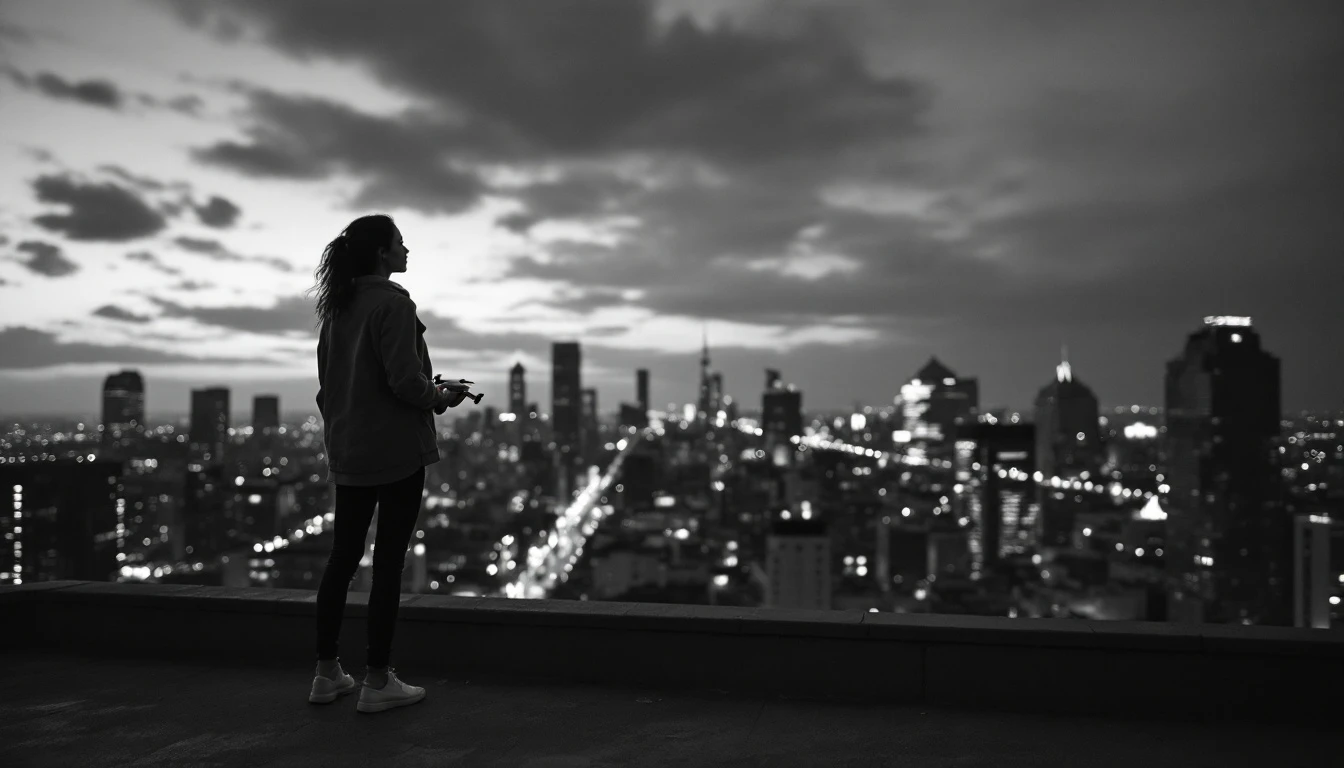
02The first flight, and the sound of my expectations recalibrating
My first launch was off a parking garage roof in a light wind, and I had my disappointment pre-loaded. I expected the nervous drift of a toy — that twitchy hover where the drone fights you and the horizon never quite sits still. Instead it found GPS in well under a minute, climbed, and when I lifted my thumbs off the sticks it just held. Locked in place over the railing like it had something better to do than wander. That position-hold is the dividing line between a tool and a toy, and the cheap ones never, ever have it. This one did.
Then I pulled the clips onto my laptop bracing for the part where I'd gently explain that "4K on a tiny sensor" is a marketing number. And the footage was — fine. Genuinely, annoyingly fine. In good light the 4K was clean, the stabilization held against a breeze that should have made it seasick, and the color out of the camera took my preset without falling apart. It was not my expensive rig. But it was, unmistakably, in the same conversation, and I sat there a little irritated, because I'd built a whole narrative around it not being.
I sent the clip to a fellow creator with no context and asked what I shot it on. She named a drone that costs six times as much.
03The clip that overperformed
The shot that broke my resistance came from the San Juans. I'd packed the MD because it fit beside my water bottle and left the big rig at home, of course, because I always leave the big rig at home. Late light, a ferry pulling a clean wake across a channel, a ridge of dark pines behind it. I launched off a low rock, flew a slow reveal up and over the treeline, and the footage that came back looked like the cold open of a streaming travel doc. Level, stabilized, the grade already most of the way there.
I posted it as the hook on a reel without overthinking it. It outran everything else I put up that month — more saves, more "where is this," more of the slow-watch retention that the algorithm quietly rewards. Nobody in the comments asked what I shot it on. Nobody could tell. And here's the part that actually stung my ego: that reel was carried by a $179 drone I'd packed expecting to mock. A few weeks later the Vancouver client signed off on a rooftop b-roll sequence shot entirely on the MD without a single note. They never asked what flew it either.
I have to be precise here, because this is a review and not a brochure: in hard conditions the gap reopens fast. In deep shadow, in flat overcast, in harsh midday sun without filters, the smaller sensor shows its limits in dynamic range — highlights clip, shadows go muddy, and the footage that looked effortless at golden hour suddenly needs work. Its transmission, rated at 4 km, behaved more like 2.5 km for me once buildings and tree cover got involved. If you bill clients for high-end aerial cinematography, this does not replace your kit, and I'd be lying if I told you it did.
But "doesn't replace a premium cinema rig for paid aerial work" is a very different sentence from "embarrassing." After three weeks the honest framing was this: for somewhere around a fifth of the price, I was getting maybe 80 percent of the result, in a body small enough that I'd actually carry it. And for the kind of footage I make most of the time — and that most creators want — 80 percent in your bag beats 100 percent left at the hotel every single time. The shot you don't get is always the worst-looking shot.
04Then I almost lost it off a cliff
Day twenty-two, on the Vancouver trip. I got greedy. I flew it out over a seawall toward a rock outcrop, low and fast, chasing a wave-spray shot I'd seen in my head, and I didn't clock how hard the onshore wind was punching above the water. The drone pitched, fought it, and for about two seconds I watched a shot I needed start to drift sideways toward open water with my stomach somewhere around my shoes. I hit return-to-home half on instinct, half in panic — and it climbed, turned, and clawed its way back over the seawall to a landing about a meter from where it launched. I was shaking. The footage, when I checked it, was actually usable.
That's the moment the "review unit" became, in my notes, just "the MD." It's not that nothing went wrong — a lot nearly went wrong, and most of that was me. It's that when I did something dumb, the safety net the spec sheet promised actually held. A cheap drone that brings itself home in a gust understands the person flying it better than a list of features ever could.
MarketDrones — The MD Foldable 4K Drone
The drone I shot this whole feature on. Cinematic 4K from a 249-gram airframe that folds down to fit a sling bag — flight-ready out of the box. Three kits: $129 (Core), $179 (Pro, with two batteries and a case), and $229 (Max, with an ND filter set for harsh light). GPS position hold and return-to-home, free U.S. shipping, a 30-day return window, and a one-year crash-replacement program for the day you fly it somewhere you shouldn't.
See the MD kits →05How it actually stacks up
Here's the comparison I'd give a creator friend over coffee, cards on the table, no brand-speak:
If you shoot high-end aerial work for clients who'll pixel-peep your dynamic range, buy the premium rig and don't think about it. But if you're a creator, a traveler, a hobbyist, or someone who has talked themselves out of a drone three times because of the price tag — the MD is the one I'd point you toward, and I say that as someone who packed it fully intending to point you away.
06What I'd want you to know before you buy
A few honest caveats, because I'm one creator with one unit and sixty days, not a testing lab. Battery life is real but modest — I planned every shoot around three batteries and the ten-minute reality of swapping and waiting, not the marketing minutes. Range swung wildly with my surroundings; the open-water number and the downtown number behaved like two different drones. The app is functional but not as polished as the billion-dollar competition's, and updates land less often. And I fly like a content creator, not a pilot — fast, impatient, chasing the shot — so your results, especially in wind, will differ from mine.
If you've never flown before: take the free FAA TRUST test before your first flight, learn where you're actually allowed to launch, and please don't chase a wave shot over open water on a windy day like I did. The 249-gram weight keeps it in the lighter regulatory class, which is genuinely convenient, but "lighter rules" is not "no rules," and flying legally and safely is entirely on you, not the drone.
07The verdict, and a small confession
I started this wanting to write that you get what you pay for and a cheap drone is a cheap drone. I can't write that anymore. What I can write is that the gap between a $179 foldable and a premium rig is real but far narrower than the price suggests, and that for most of the flying most creators actually do, the small drone in your bag wins on the only metric that's ever mattered to me: it's the one you'll have when the light is good.
The expensive rig is still mine, for the jobs that demand it. But the MD is what's been living in my sling bag for two months, and the footage it shot has already outperformed — on saves, on shares, on a client sign-off with zero notes — gear that costs six times more. My followers couldn't tell. Honestly, on the good days, neither could I. I'm still a little annoyed about being wrong.
This article is a paid advertorial produced in partnership with MarketDrones and contains links to the sponsor's commerce site. MarketDrones did not have copy approval prior to publication. The author conducted a personal, subjective, hands-on test of a single MD Pro unit over a 60-day period across three trips; drone performance, footage quality, transmission range, flight time, and wind handling are materially affected by weather, altitude, location, radio interference, pilot skill, and individual unit variation, and your results will differ. References to a "premium rig" describe consumer aerial gear the author owns independently; that gear is not affiliated with the sponsor or this article, and the comparison reflects the author's general creative impression rather than a controlled lab measurement. Engagement and client outcomes described here are the author's own and are not a promise of comparable results.
Nothing in this article is professional flight, safety, or purchasing advice. Drone regulations vary by country, state, and locality and change over time — readers are responsible for passing any required tests (such as the FAA TRUST test for U.S. recreational flyers), registering where required, respecting privacy and restricted airspace, and operating legally and safely. Pricing, kit contents, specifications, and program terms (including the crash-replacement program and the return window) are current as of publication and subject to change; confirm the current details on the sponsor's site before purchasing.